Sustainability
Sustainability Across the Entire Building Lifecycle
Sustainability decisions are engineering and commercial decisions. We assess them against energy use, water use, waste, comfort, operating cost, and building lifespan.
Our Philosophy
A building is a system, not a specification sheet.
Substituting one material for a better alternative is a good decision, but the largest effects are usually set earlier: by form, envelope, systems sizing, and how the asset will be operated. We therefore work across the whole lifecycle rather than at a single point in it.
We do not publish certifications, ratings, or environmental achievements that have not been independently verified. Measured results will be published as project data becomes available.
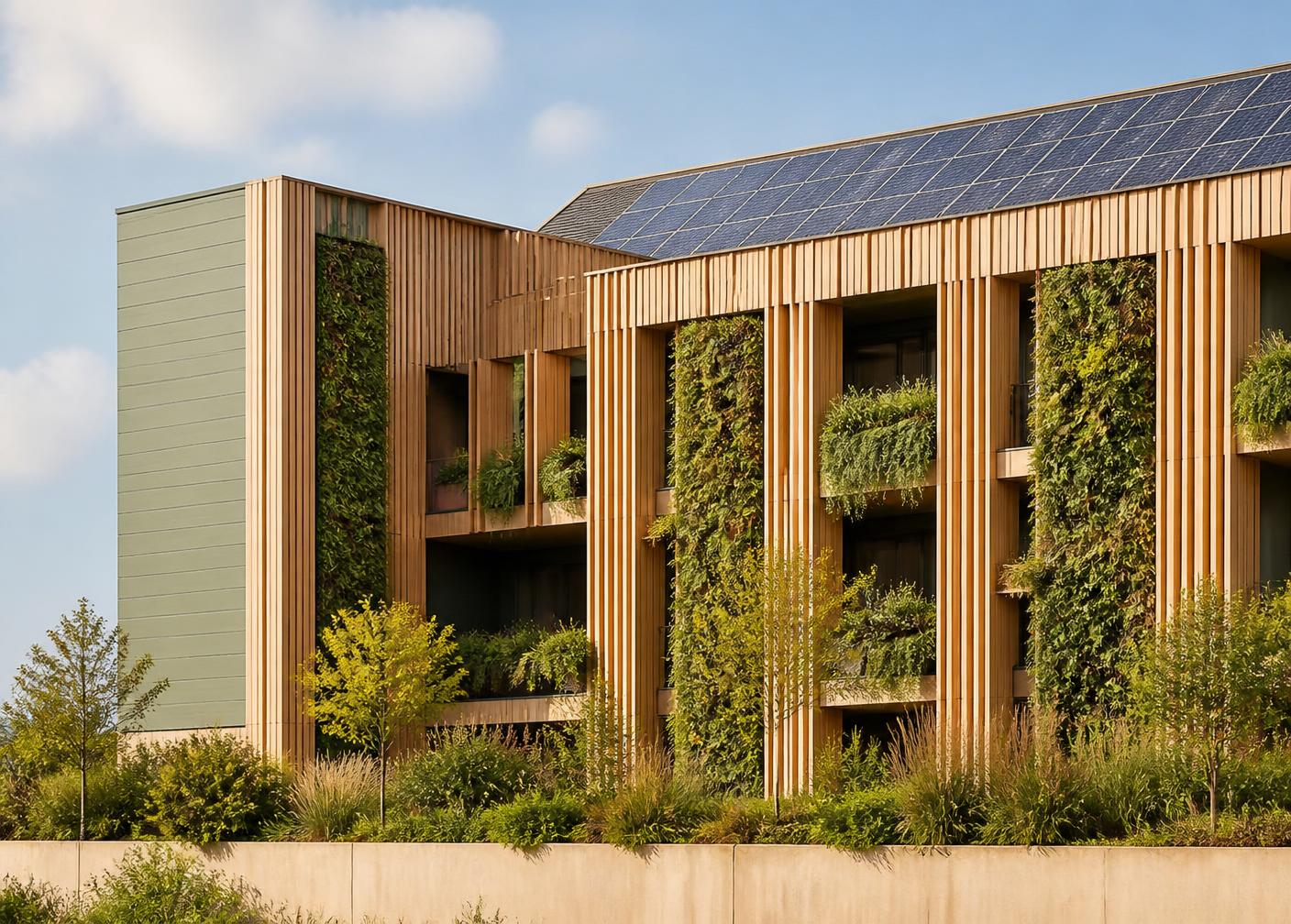
Lifecycle Approach
Six stages, one continuous responsibility.
Each stage carries decisions that affect environmental performance. Treating them as one sequence prevents gains made in design from being lost in procurement or operation.
Where We Act
Eight areas of practical focus.
- 01
Design and planning
Orientation, massing, envelope performance, glazing ratio, and correctly sized systems are reviewed before construction commitments are made.
- 02
Responsible procurement
Suppliers are assessed on material responsibility, transport distance, packaging, and the ability to evidence what they supply.
- 03
Construction waste
Waste is reduced by dimensional coordination and procurement planning first, then managed by segregation, reuse, and recovery on site.
- 04
Energy efficiency
Insulation, glazing, air tightness, lighting, HVAC selection, and controls are considered as one performance system.
- 05
Water efficiency
Fixture selection, irrigation strategy, leak detection, and metering reduce consumption and expose losses early.
- 06
Building rehabilitation
Retrofitting an existing asset is often the lowest-impact option. We assess condition, performance, and upgrade potential before replacement.
- 07
Renewable-energy integration
Solar and other on-site generation options are evaluated for roof capacity, load profile, and practical payback.
- 08
Operations and maintenance
Performance is monitored after handover so efficiency measures continue to deliver through the asset's life.
Measurement Framework
What we will report.
Sustainability claims should rest on measurement. These are the categories we track on delivered projects.
Baseline figures require completed projects and monitored operation. Verified data will be published as it becomes available.
Material-waste reduction
Baseline in preparation
Reuse and recycling
Baseline in preparation
Energy consumption
Baseline in preparation
Water consumption
Baseline in preparation
Indoor environmental quality
Baseline in preparation
Operational cost
Baseline in preparation
Building lifespan
Baseline in preparation
Local supplier participation
Baseline in preparation
Partner Ecosystem
Delivered with specialists.
Sustainability work draws on energy consultants, commissioning specialists, material suppliers, waste-management contractors, and renewable-energy providers. Partner organisations will be named only where a formal agreement is in place and disclosure has been agreed.
Want a sustainability review of your project?
We can assess design decisions, energy and water performance, material strategy, and retrofit potential, then set out practical options.